


INNOVADERM CRO IS NOW INDERO.

Nimbus Testimonial

Indero

Indero

Team of Experts

Author picture

Innovaderm is proud of its partnership with Nimbus Therapeutics for an investigational oral TYK2 inhibitor, in a Phase 2b trial for patients with moderate-to-severe psoriasis.

Innovaderm’s reputed teams once again proved their expertise throughout the whole project, from the study design all the way to the trial reports, under tight timelines.

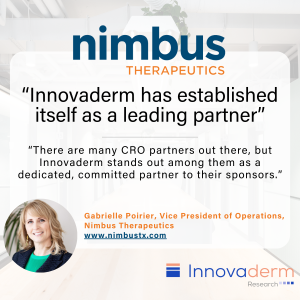
“There are many CRO partners out there, but Innovaderm stands out among them as a dedicated, committed partner to their sponsors.” Gabrielle Poirier, Nimbus Therapeutics.

Let our satisfied clients detail our proficiency in managing dermatology clinical trials:

  • Gabrielle Poirier, Vice President of Operations at Nimbus Therapeutics
  • Bhaskar Srivastava, Senior Vice President of Clinical Development at Nimbus Therapeutics (now with Triveni Bio)

SHARE THIS POST

Subscribe to our newsletter.

Do not miss out on valuable insights and research updates. Join our scientific community today!

This field is for validation purposes and should be left unchanged.

Jeff Smith

Chef de la direction

Jeff Smith, Chef de la direction d’Indero Recherches, apporte prĂšs de 30 ans d’expĂ©rience dans l’industrie pharmaceutique et CRO, s’Ă©tant distinguĂ© par son leadership exceptionnel, sa vision stratĂ©gique et son innovation. L’expertise de Jeff couvre des opĂ©rations mondiales, la gestion de la croissance, ainsi que la promotion d’une culture d’entreprise collaborative. Ses atouts en matiĂšre de crĂ©ation de valeur, de gestion des partenaires et d’opĂ©rations CRO ont toujours contribuĂ© au succĂšs dans ses fonctions prĂ©cĂ©dentes. Sous la direction de Jeff, Indero continue d’étendre ses capacitĂ©s, faisant progresser les connaissances mĂ©dicales et les nouvelles thĂ©rapies en dermatologie et en rhumatologie.

Revolutionize Your Topical Trials

Efficacy insights in days, not months.

 Indero’s Early Phase 1 model enables sponsors to initiate topical studies that detect early pharmacodynamic signals much sooner than traditional phase 1, using microdosing and transcriptomic analysis. This approach reduces preclinical requirements, shortens study duration from 8–12 weeks to ≀3 days, and lowers costs, helping teams make informed go/no-go decisions faster.