



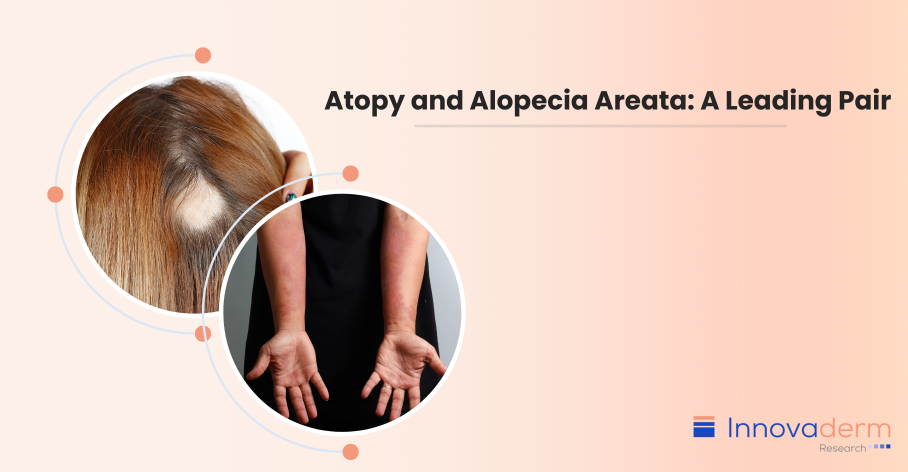
Alopecia areata (AA) and atopy, which is a predisposition to develop allergic reactions, share a significant connection. While thyroid complications are often the primary concern in autoimmune diseases, a substantial number of these patients also suffer from allergies and hypersensitivities. In fact, atopic conditions are found in 30% to 50% of AA patients.
Importance of Understanding Atopy as a Comorbidity in AA
Interestingly, AA flares often coincide with peak allergy seasons in the spring and fall. These flares were previously attributed to changes in the season or to the stress associated with the start of the school year, but the correlation with peak allergy seasons suggests a potential link between these conditions.
Relationship Between AD and AA
Recent studies show that AA often follows a flare of atopic dermatitis (AD), leading to the hypothesis that managing AD may also help control AA.
A case study of a patient under the care of Dr. Mesinkovska illustrates this connection. The patient, who was being treated with a strong Janus Kinase (JAK) Inhibitor for AA, experienced a flare of AD and subsequent hair loss after exposure to olive tree pollen, to which she was allergic. This case highlights the potential impact of environmental allergens on AA.
Overview of Allergies in AA Patients
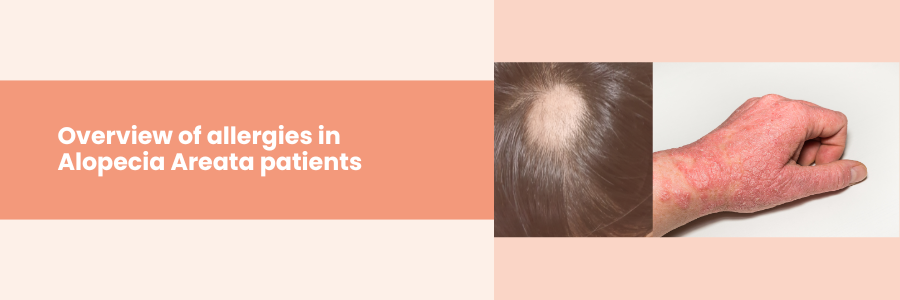
The connection between AA and allergies, previously dismissed, is now supported by emerging evidence.
Recent research suggests the potential involvement of Immunoglobulin E (IgE) in AA. Additionally, mast cells and IgE are now recognized to play significant roles in various skin conditions, such as bullous pemphigoid, dermatitis herpetiformis, and lupus. Furthermore, studies indicate that allergies might trigger autoimmune flares, and there appears to be a link between elevated IgE levels and psoriasis. Overall, this points to a broader role for IgE in both autoimmune and skin diseases.
Significance of Eosinophils and Mast Cells
Eosinophils and mast cells, key players in allergic reactions, have been implicated in AA. Antihistamines, which target mast cells, have been used to slow the progression of AA.
Dupilumab as a Double Treatment of AA and AD
Dupilumab, a medication for AD, has shown promise as a dual treatment for both AD and AA. However, identifying the right patients and gaining access to the medication can be challenging.
While Dupilumab can be effective at treating AA, it may cause hair loss in some cases. It can serve as a good alternative for AA patients who cannot take Jak inhibitors due to heart problems or cancer.
The relationship between atopy and AA is complex and multifaceted. As our understanding of these conditions continues to evolve, so will our approach to treatment. Future research should continue to explore the role of allergies and atopic conditions in AA, with the goal of improving patient outcomes.
Let’s revolutionize the research landscape and shake up the industry. Harness the power of Innovaderm for your impending trial and catapult your studies into uncharted territories.