


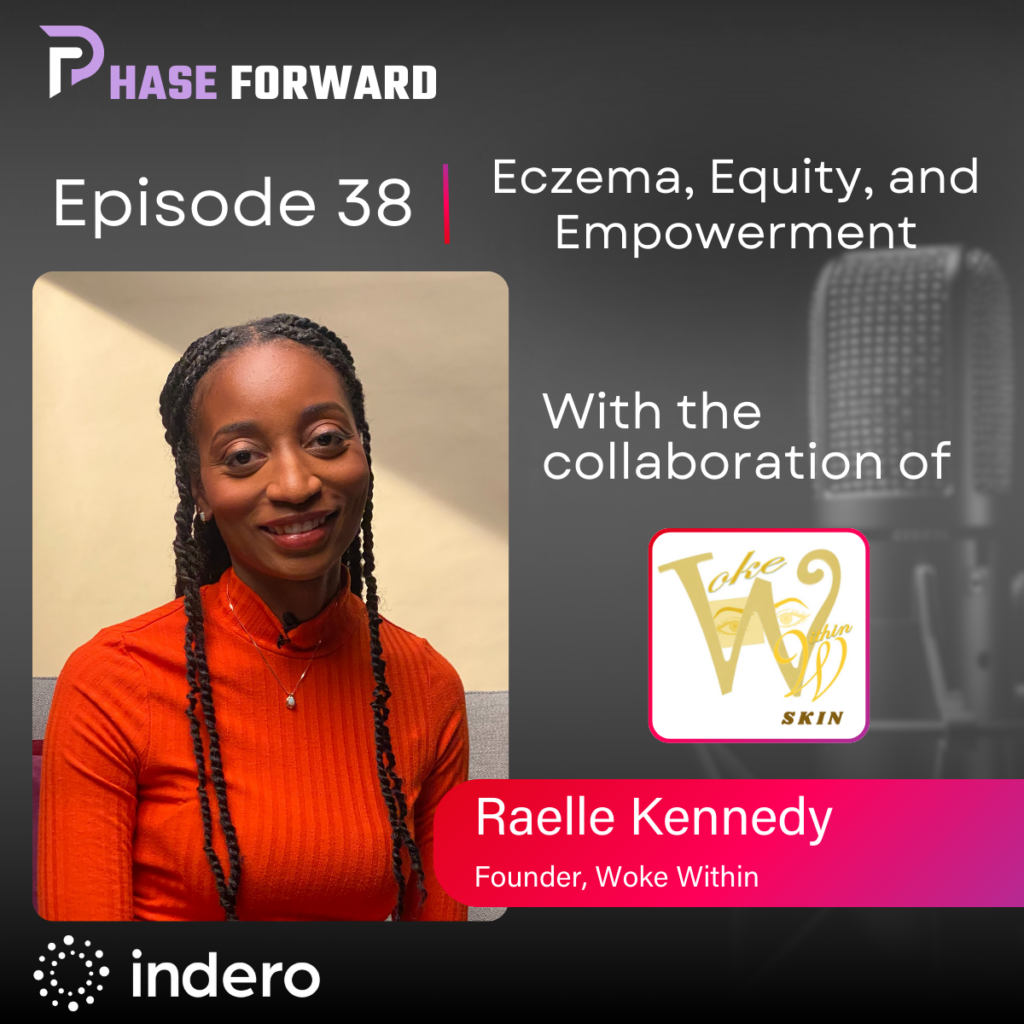
Our guest is Raelle Kennedy Brown, a brand marketing consultant, video producer, writer, patient advocate, and founder of Woke Within Skin, a platform dedicated to empowering individuals living with chronic conditions through storytelling, education, and community connection. Through Woke Within, Raelle blends advocacy, lived experience, and communication strategy to help organizations better understand the emotional, cultural, and clinical dimensions of chronic illness, particularly for those with sensitive skin like eczema and other hyperinflammatory conditions.
The episode explores:
- The role of storytelling in patient advocacy
- Building trust and transparency in clinical trials
- Designing research that reflects diversity and inclusion
A Personal Approach to Eczema
Raelle Kennedy Brown’s personal journey with eczema cultivates empathy and urgency in her advocacy. Significant gaps in medical care, particularly during 2018, lead Raelle to experience severe eczema and subsequent topical steroid withdrawal, a condition with intensified symptoms and withdrawal challenges. This period prompts Raelle to seek community support online, empowering her to create the Woke Within Skin platform. By sharing her experiences, Raelle mastered the art of storytelling and connected with a broad audience, underscoring the mental, emotional, and financial impacts of eczema.
Raelle’s desire for improved outcomes motivated the development of the Woke Within Skin philosophy, which emphasizes hope, acceptance, and internal awareness rather than a solely external focus on symptoms. At that time, treatment relied almost exclusively on topical steroids, a solution that proved inadequate for Raelle and many others. Limited representation of melanated individuals in advocacy and medical resources further highlighted the need for inclusive solutions and messaging. Raelle intentionally selected the term “woke” to signal cultural awareness and self-empowerment.
Raelle observed significant disconnects in communication between patients and healthcare organizations, with minimal trust and understanding. As a patient research advocate with the National Eczema Association, Raelle discovered a genuine interest among industry professionals to address patient needs. She focuses on eliminating barriers to relief, such as restrictive step therapy laws and ineffective communication strategies. Raelle advocates for incorporating diverse voices, adjusting language to match patient experiences, and improving representation in educational materials as essential actions for building trust.
Her advocacy highlights the absence of representation for African Americans in eczema-related media, despite this group being the most affected demographic. By speaking openly online, Raelle contributes to broader movements for health equity. Her lived experience facilitates community building and attracts further advocacy opportunities. Raelle emphasizes bridging the gap between industry terminology and patient language, prioritizing compassion, and listening before designing interventions as necessary steps for effective care.
Raelle advocates for inclusive clinical trial design that begins with listening to the target population and understanding the market before developing protocols. She recommends focus groups, hiring individuals with lived experience, and leveraging culturally relevant expertise. Raelle encourages transparent, layperson-friendly communication and patient-led educational resources to enhance understanding and engagement. She recognizes that micro-influencers and community advocates play a critical role in connecting organizations with the populations they serve.
The Black Community: A Key Demographic
Highlighting patients with melanated skin, particularly Black individuals with eczema, remains essential due to significant prevalence in these populations. From a business perspective, inclusion is logical, as African Americans demonstrate the highest rates of eczema diagnosis. Data from the Centers for Disease Control and Prevention indicate that non-Hispanic Black children are 14.2% more likely to have eczema than non-Hispanic White children. Asian Americans experience the most severe cases among racial groups. Representation in clinical imagery and educational materials is lacking, impeding proper diagnosis and treatment. Symptoms manifest differently on skin of color; flares may appear brown or purplish with itchy bumps, rather than bright red. Medical textbooks and continuing education resources are only recently being updated to reflect these differences. Insufficient representation leads to misdiagnosis and inadequate care for severe symptoms. Recent educational events, such as presentations to the Vietnamese American Medical Association, have revealed considerable gaps in practitioners’ knowledge regarding new biologic treatments and their impact on people of color. Systemic issues persist, resulting in ongoing suffering due to limited awareness among healthcare professionals.
Understanding Why Eczema Patients May Hesitate to Join Clinical Trials
Historical mistrust in medical research, particularly among marginalized groups, remains a significant challenge. Addressing the root causes of this cultural distrust is essential for progress. The existence of genuine and concerned individuals in clinical research offers hope, yet historical facts cannot be overlooked. Minor procedural improvements may help alleviate mistrust. Recent advancements, such as biologic treatments for people of color that target the root causes of eczema, provide promising data and may encourage participation in clinical trials. However, concerns persist regarding placebo use for symptom management; participants seek relief, not uncertainty. Additional apprehension arises from being treated as test subjects instead of partners. Clear communication about options and the right to refuse participation, along with transparent explanations of risks and benefits, is necessary to build trust and foster engagement.
Building Trust Between Sponsors, CROs, and Hesitant Communities
Open dialogue with patients is essential for educational sessions, which can be conducted virtually, shared via newsletters, and promoted through online platforms with influential community voices. Collaboration with trusted community leaders and advocates is crucial for increasing visibility and engagement. Building strong relationships with these leaders, nonprofits, and advocates is the primary strategy for establishing trust.
Redefining Wellness
The concept of wellness extends beyond the absence of illness, encompassing daily efforts to improve physical, emotional, and spiritual well-being. Chronic eczema can persist throughout life, yet effective management and ongoing self-care contribute to overall wellness. Recovery from severe flares requires addressing both physical symptoms and underlying stressors. Wellness should not be viewed as a fixed endpoint but as a continual process of making positive choices. The pursuit of perfection in health is unrealistic; instead, wellness involves accepting imperfections and focusing on holistic healing. Sharing personal experiences and success stories in managing chronic conditions helps others feel supported and less isolated. The narrative surrounding wellness and chronic illness has evolved, with greater emphasis now placed on self-advocacy, community support, and individualized approaches to care. Every unique voice and story contributes to reshaping perceptions and highlighting the importance of patient perspectives in healthcare.
Designing Patient-Centered Trials
Begin clinical trial design by listening deeply to patient stories. Prioritize understanding the complete lived experience, including emotional and cultural aspects of care, alongside clinical endpoints. Provide safe spaces for open dialogue. Engage individuals connected with the community or collaborate with nonprofit organizations leading patient advocacy. Treat patients as collaborators, not merely participants.
As we conclude another illuminating episode of Phase Forward, we find ourselves at the crossroads of science and progress. Remember that behind the jargon and statistics, lies stories of unwavering commitment, meticulous observation, and the pursuit of evidence that shapes our understanding of health and disease. Stay at the forefront of knowledge and innovation and follow Phase Forward on your preferred platform. My name is Valerie Coveney. Thank you for joining us. Until next time.